
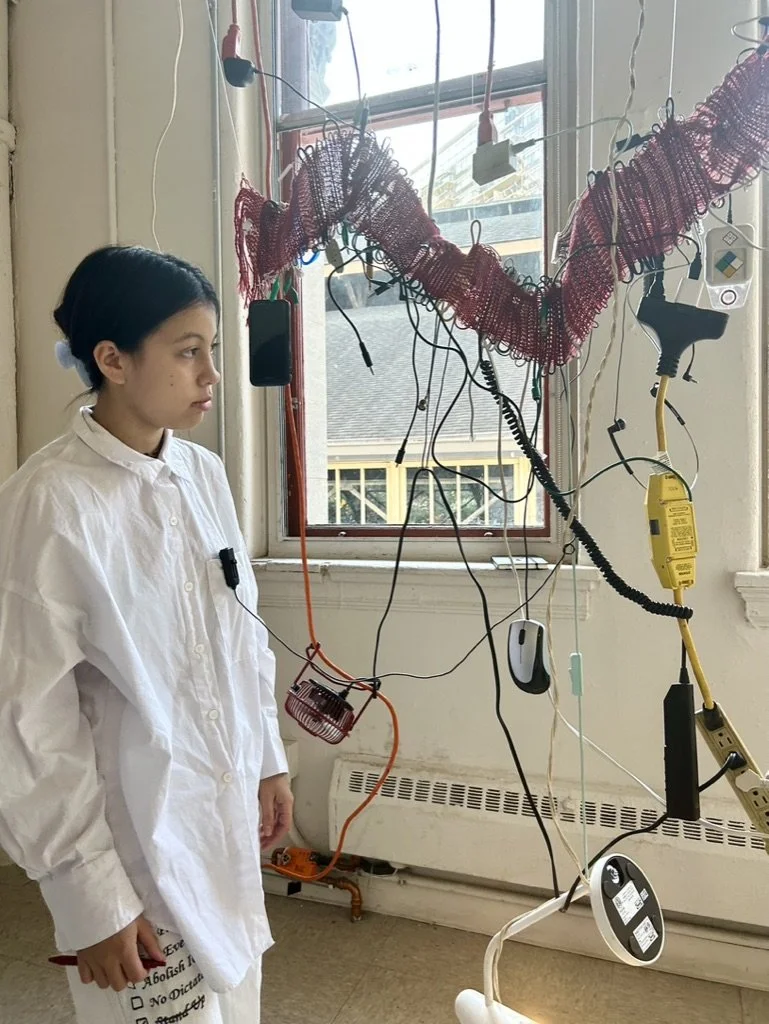
Simone Isip is a fiber and community-based artist of Filipina and Jewish descent. Their work, an array of textile, installation, wearables, performance, and organizing, is motivated by a desire for connection and solidarity amidst the complexities of living in the heart of an imperial power. They’ve recently exhibited work at The Maryland Institute College of Art, Blanc Gallery in Quezon City, Philippines, Lakefest in Columbia, Maryland, and worked on costumes for national tours of The Comet Poppea and & Juliet with Dover Studio. Isip graduated the Maryland Institute College of Art with a BFA in fiber arts and is now based between Brooklyn and Baltimore.
Personal Statement
Engaging in the expansiveness of play and imagination, I investigate, and resituate objects regarded as mundane or of a single function in a mission to recontextualize and understand the human condition. Through explorations of material, scale, and repetition, I poke and prod at the constraints of reality, suggesting alternative futures that exist radically outside of our familiar societal constraints. My work, often activated through performance, relies on movement and proximity to the human body to explore and portray subject-object relationships both speculative and of the status-quo. My practice is highly reactive, emotionally responsive, and in tune to present happenings in which I both directly and indirectly experience. In confronting my own positionality, I open up the conversation of our individual and collective roles as both victims and perpetrators of the cycles of violence and trauma in which we all have been born into.